Mental Health Counseling vs. Psychotherapy: Which One Is Right for You?
Introduction: Why Your Mental Health Matters
Your mental health plays a vital role in how you think, feel, and interact with the world. When challenges feel overwhelming, professional support can restore balance and clarity. But should you choose mental health counseling or psychotherapy? While these terms are sometimes used interchangeably, they have distinct goals and methods. This article explains both clearly and helps you choose the right path for your needs.
What Is Mental Health Counseling?
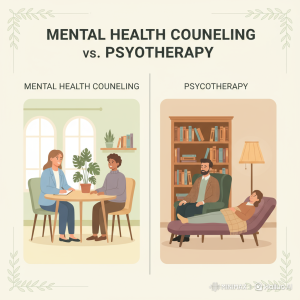
Mental health counseling is short-term, goal-focused support that helps people manage immediate life challenges. Counselors teach practical coping tools and problem-solving strategies to address everyday stressors like grief, workplace strain, or relationship conflicts.
The Main Goals of Counseling
- Address immediate concerns (e.g., job stress, grief)
- Develop coping tools and communication skills
- Promote resilience for future challenges
Common Types of Counseling
- Marriage and family counseling
- Career counseling
- Addiction counseling
What Is Psychotherapy?
Psychotherapy, often called “talk therapy,” is a longer-term treatment that explores deep emotional patterns and the roots of psychological difficulties. It helps clients uncover how past experiences, beliefs, and unconscious dynamics affect current behavior and mood.
Common Therapy Approaches
- Cognitive Behavioral Therapy (CBT): Identifies and changes unhelpful thoughts and behaviors.
- Psychodynamic Therapy: Explores childhood experiences and unconscious patterns.
- Humanistic Therapy: Emphasizes self-awareness and personal growth.
When Psychotherapy Is Recommended
Psychotherapy is typically recommended for chronic or recurring issues such as depression, anxiety disorders, trauma (PTSD), and personality-related patterns that impact daily life.
Key Differences: Counseling vs. Psychotherapy
| Aspect | Mental Health Counseling | Psychotherapy |
|---|---|---|
| Focus | Immediate life challenges and stress | Deeper emotional and psychological roots |
| Duration | Short-term (weeks to months) | Long-term (months to years) |
| Goal | Practical coping skills | Emotional insight and transformation |
| Approach | Structured, goal-oriented | Exploratory, insight-focused |
How to Choose Which Is Right for You
Ask yourself: Are you looking for quick, practical strategies to solve a current problem, or do you want to explore deeper emotional patterns that keep repeating?
- Choose Counseling: If you need short-term help with stress, grief, or a life transition.
- Choose Psychotherapy: If you face long-term emotional struggles, trauma, or persistent relationship problems.
Often people benefit from a combination of both: counseling for immediate relief and psychotherapy for deeper healing.
Accessing Mental Health Services
Services are widely available both in-person and online. When choosing a provider, verify credentials, review specialties, and consider scheduling an introductory session to test the fit.
Checklist for Choosing a Provider
- Confirm license and credentials
- Look for experience with your specific concerns
- Check fees and insurance coverage
- Ask about session length and expected duration
Conclusion: Prioritize Your Mental Health
Whether you select mental health counseling or psychotherapy, beginning the journey to improved mental well-being is a courageous and valuable step. Both paths can lead to growth, clarity, and better relationships — pick the one that aligns with your needs, or combine them for staged care.


